

Originally Published as: Summer Shop Season: Designing Residential Post-Frame Hobby Shops for Peak Use
Danielle Bower is the financial manager at Whitetail Construction, a Pennsylvania-based post-frame building company that specializes in garages, dairy barns, horse barns, and more.
For a lot of people, there’s nothing quite like working in your hobby shop with the doors open and summer sunlight pouring in. That is, until the heat builds, the air gets heavy, and the space becomes uncomfortable fast.
And as a builder, that’s not the kind of environment you want to hand over to a customer. Avoiding that often comes down to how the building is designed from the start. A few key considerations can make the difference between a space that overheats and is unusable and one that stays comfortable all summer long.
Ventilation: More Than Just a Ridge Vent
At a baseline, every building should include proper passive ventilation. We use a ridge vent and vented soffit in every building. That’s the starting point. From there, it comes down to how the customer plans to use the space.
If the planned building will only be used occasionally, then standard ventilation may be enough. If a customer is planning to be in the building only rarely, we would also use our standard ventilation practices. If the customer does have more extensive plans, we would use our standard ventilation practices and see if they would want more windows or doors, and discuss insulation options. If the customer is going to be using the building daily, we would do the basic ventilation practices and recommend additional windows, insulation, or AC or mini-split options.
Poor ventilation, combined with low ceiling heights or poor building placement, is one of the biggest reasons shops become uncomfortable in the summer. Low ceiling heights, how the building is placed on the property, and poor ventilation all contribute to that discomfort. On the other hand, a well-ventilated structure, especially one that’s designed for how the building will be used, keeps the space usable even during peak heat.
Room to Move, Work, and Grow
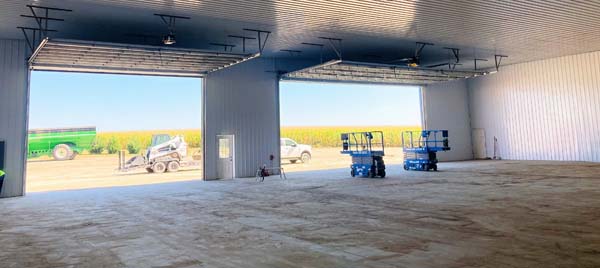
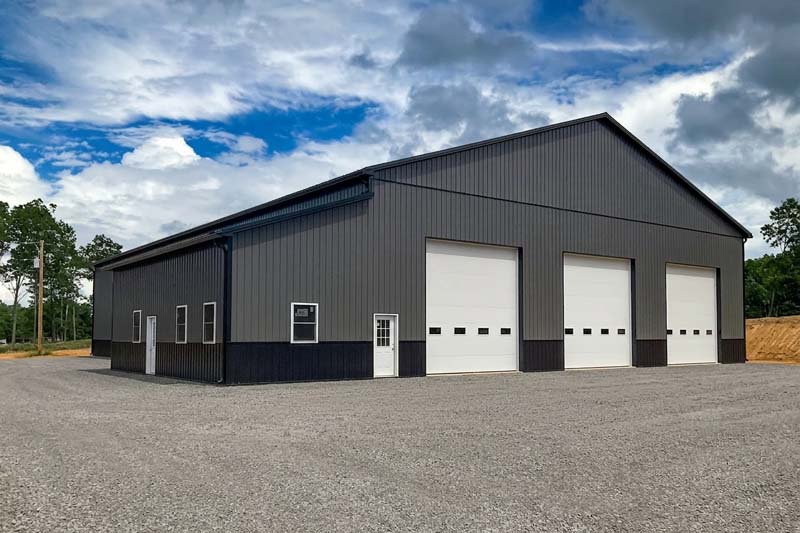
When you’re talking about building a hobby shop, you have to consider what’s going to go inside. Hobby shops may need to accommodate vehicles, bigger tools, and, depending on the kind of workshop, be able to move large projects in or out.

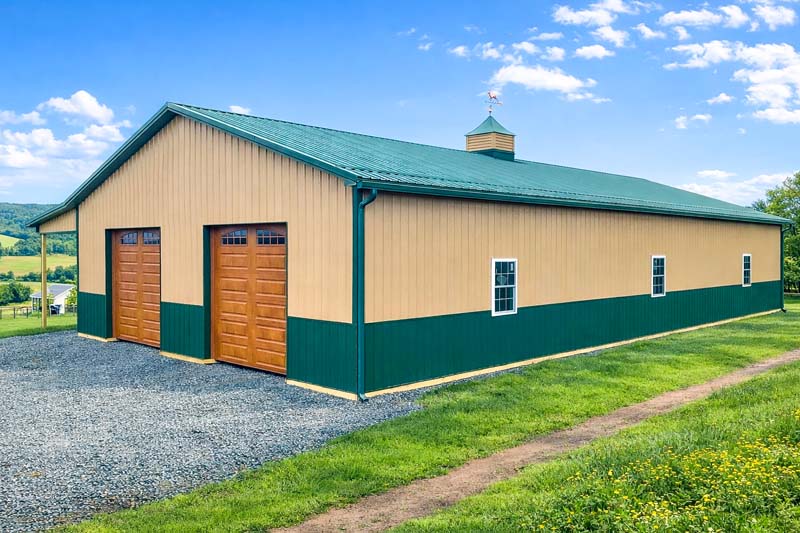
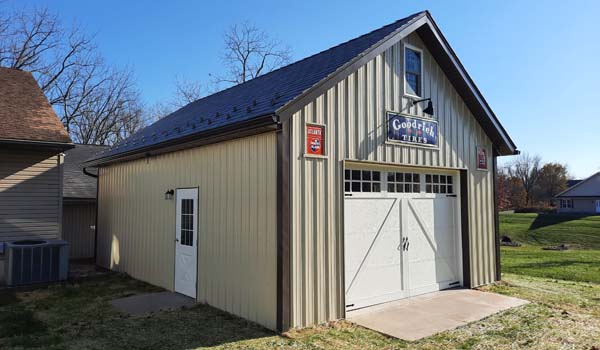
For that reason, it’s almost always good to have a garage door and one service or entry door. That’s important for fire safety, but also just as importantly, it gives the building flexibility. What starts as simple box storage can one day be used to store a riding lawn mower, and the next, be converted into a virtual golfing space.
We see clients using these spaces for vehicle storage, more garage space, or even business ventures like car repair shops or hobby ag barns. That means the structures need room to move equipment, bring materials in and out, and work without feeling restricted.
Thermal Comfort: Fighting the Heat Before it Wins
There are a few passive solar tricks you can include to keep heat at bay before you switch on the mini split.
A concrete floor is a must. It’s durable, easy to maintain, and essential for most hobby shop uses. Concrete works great to help moderate temperatures, but can get hot if exposed to direct sunlight.
From there, insulation, ventilation, overhangs, and ceiling height all play a role. Higher ceilings help reduce heat buildup, while proper insulation and airflow keep temperatures manageable. After that, insulation choice, ridge vents, soffit ventilation, ceiling fans, and mini-splits all contribute to keeping the building cooler.
For those who want a conditioned space, planning ahead for a mini-split system makes a big difference. Even if it’s not installed immediately, roughing in for future climate control gives them options.
Daylighting: Sell Natural Light as a Design Feature
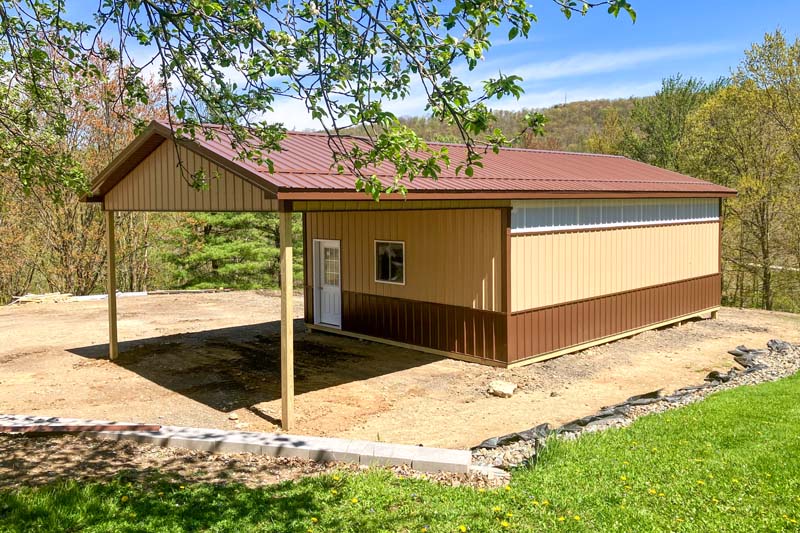
It’s a good idea to tailor the number of windows to the size of the building and how the client plans to use it. Natural light reduces reliance on artificial lighting and makes the space feel less like storage and more like a true workspace.
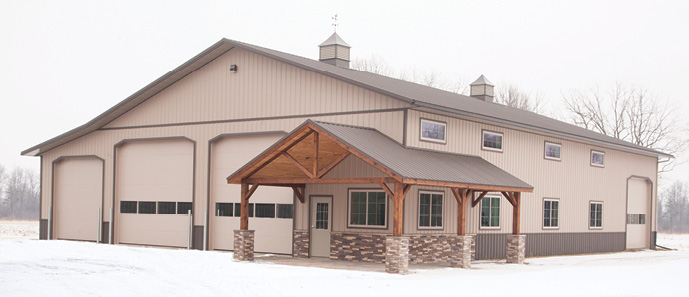
There are multiple ways to bring that light in. Glass in garage doors and entry doors, and skylight options for customers looking for a more cost-effective solution are great ways to brighten up a space.
The key is balance. You want enough light to make the space functional without turning it into a heat trap. When done right, daylighting improves both comfort and usability.
Flexible Use: Designing for What Clients Don’t Know Yet
Most customers come to builders with a specific use in mind. They are usually looking for vehicle storage, more garage space, or sometimes planning a business venture like a car repair shop or woodworking space. But those needs change over time.
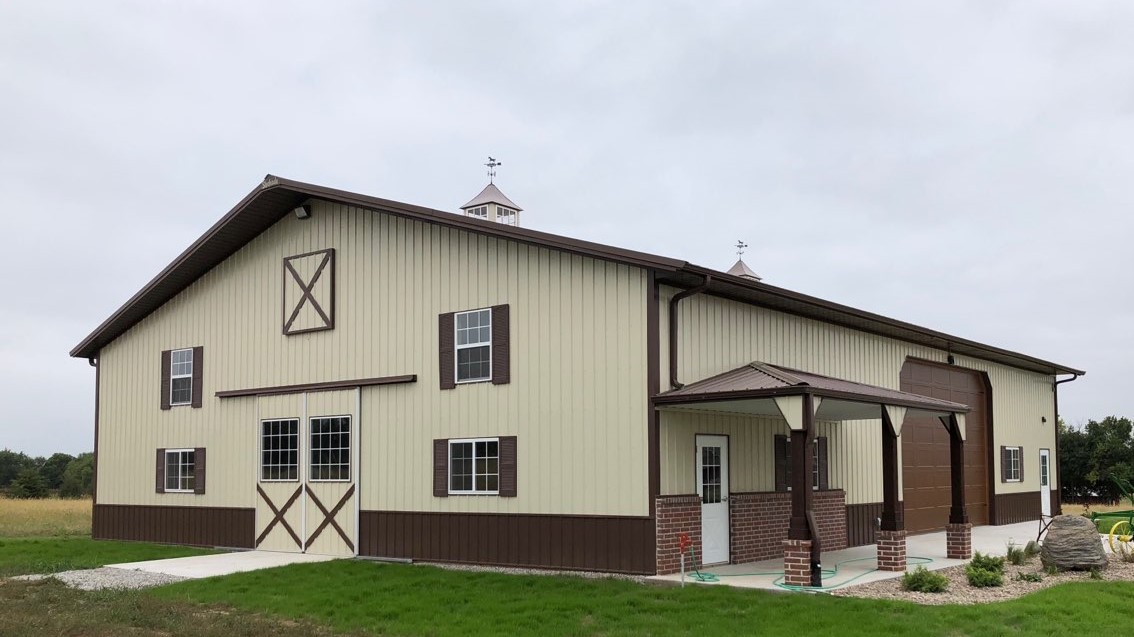
We had a project once where a client needed garage space, office space, and a hobby gun parts shop all in one. We built a 36x56x18 structure with a mezzanine and wrap-around porch. It included higher windows, insulation, a 12×12 garage door, upgraded posts, and a standing seam roof. The mezzanine created office space above, while the space below was used for the hobby shop and storage. Then, he had a garage door to pull vehicles in and an area for tools. Because those spaces were all considered and designed with those uses in mind, he really was able to give a longer life to the building.
That kind of flexibility starts with asking the right questions early. Both the builder and your customer should be on the same page as to the location of the project, budget, timeline, aesthetics, permitting, how much space is needed, whether the structure will be temperature-controlled, utilities, interior finishing, number of windows, and number and style of doors.
Pre-planning can show up in the structure design itself. Clear-span interiors allow for open layouts. For us, we can free span up to 80 feet (and larger in some cases), which allows for flexible interior finishing options. Lean-tos, mezzanines, and extended overhangs create additional usable space, and they can also add to the overall aesthetic.
The Builder’s Edge: Selling Summer Performance
Most customers won’t come to you asking about ventilation strategies or thermal performance. That means it’s your job to consider their structure’s warmest days.
When you bring these considerations to the table early, you’re able to position yourself as more than just a builder. All of a sudden, you become a trusted partner in design and planning for the structure’s future use.
Post-frame construction already offers clear advantages. It is cost-effective, allows for wide clear spans, offers flexible interior finishing options, and has a quicker build time.
A shop that’s actually usable in July is a shop the client talks about. And hobby shop customers tend to know other hobby shop customers.
By building with the hottest days in mind, you might just be building your customer base.