
Originally Published as: Mold In Post-Frame Construction: Causes, Prevention, and Mitigation
My family happens to like strawberries. Every week we will eat two to four pounds of them. Our challenge is shopping for them, where we must closely examine carton after carton to find ones free of white fluffy cotton candy looking stuff … mold.
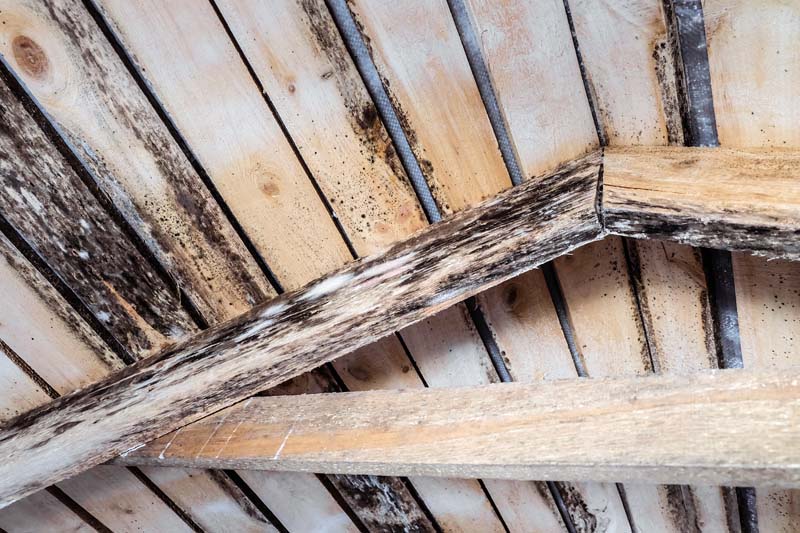
Mold is a type of fungus thriving in moist environments, both indoors and outdoors. It appears as fuzzy, slimy, or powdery patches in various colors, including green, white, black, or even pink. Mold plays a crucial role in nature by decomposing dead organic matter, but indoors, it can cause significant problems, including health issues and property damage.
Mold reproduces by producing tiny spores easily spread through air. These spores require moisture and organic material to grow. While many molds are harmless, some can produce mycotoxins. These may lead to allergic reactions, respiratory problems, and other health issues, especially in sensitive individuals.
Mold in post-frame construction typically arises from a combination of moisture, inadequate ventilation, and organic materials providing nutrients for mold growth. Here are main causes:
1. Moisture Accumulation: Mold thrives in damp environments. Common sources of moisture include:
- Leaking roofs, walls, or windows.
- High humidity levels within building.
- Condensation on surfaces, especially in poorly insulated areas.
2. Inadequate Ventilation: Proper airflow is crucial to prevent moisture buildup. Without sufficient ventilation, humid air can become trapped, creating ideal conditions for mold to flourish. This is particularly important in attics and crawl spaces.
3. Organic Materials: Mold feeds on organic materials found in construction, such as wood and certain types of insulation. If these materials are wet or damp, they can become breeding grounds for mold.
4. Poor Construction Practices: Using wet or moldy lumber during construction can introduce mold spores into buildings. Additionally, improper sealing or installation of roofing, siding and windows can lead to leaks and moisture intrusion.
Proper planning can assist in minimizing potential of increased moisture and humidity within post-frame buildings.
Way back in my post-frame building contractor days (before the turn into this century) we thought nothing of pouring concrete slabs on grade without a vapor barrier below. Concrete is inherently porous, meaning it contains tiny voids allowing water and other substances to permeate through it. Think of concrete as being a very heavy sponge.
United States requirements for vapor barriers under concrete slabs are primarily outlined in 2021’s International Residential Code (IRC). Here are key IRC points, specifically Section R506.2.3:
1. Thickness Requirement: Minimum thickness for a vapor retarder has been increased to 10 mils (0.010 inch). This change was made to enhance durability and reduce likelihood of punctures during construction.
2. Material Specification: Vapor retarder must be made of polyethylene or another approved material conforming to ASTM E1745 Class A.
3. Installation Guidelines:
- Vapor retarder should be placed between base course or subgrade and concrete slab.
- Joints must be lapped by at least six inches and sealed to maintain continuity.2
- It is crucial to seal around all penetrations (like pipes and conduits) to prevent moisture migration.
Exceptions: A vapor barrier is not required in certain situations, such as:
- Garages and utility buildings.
- Unheated storage rooms under 70 square feet.
- Driveways, patios, and other flatwork not likely to be enclosed later.
- Where local building officials approve based on site conditions.
Importance: Proper installation of a vapor barrier is essential to prevent moisture-related issues, such as mold growth and damage to flooring materials. About 40% of concrete slab failures are moisture-related, making adherence to these codes critical.
Vapor barriers are inexpensive and, in this author’s humble opinion, should be placed under any slab on grade in an enclosed (or having possible future enclosure) post-frame building.
At time of pour, a cubic yard of concrete typically contains approximately 30 to 40 gallons of water. After pouring concrete, within an enclosed or partially enclosed building, leave doors and windows open to allow moisture leaving the concrete to escape from the building.
Proper site grading is essential for managing water drainage and potentially reducing the moisture entering building.
Grading Guidelines
- Slope Away from Foundations: Ground should be graded to slope away from building foundation at a minimum of 5% (1/2 inch per foot) for 10 feet per 2021 IRC R401.3.
- Use of Swales and Drains: If site is level or slopes toward building, swales can be installed to capture and redirect stormwater. Swales should have a 3:1 width-to-height ratio and a slope of 2% to 4%.
- Drainage Systems: Implementing drainage systems, such as French drains, can effectively manage excess water. These should be installed at least 18 inches below ground and must slope toward an outlet.
At Hansen Pole Buildings, we order only kiln dried lumber, paper wrapped and stored atop concrete. We have found opened units, when loaded on trucks, can develop surface mold within as little as 24 to 48 hours and this is accelerated by high humidity and/or warm temperatures.
Lumber, after delivery on site, can often develop mold. Once the building is enclosed, spraying mold or mildewed lumber with undiluted white vinegar, or a solution of 1 part detergent, 10 parts bleach, 20 parts water and allowing to dry will mitigate most instances.
Certain types of damp insulation can indeed encourage mold growth, primarily due to their material composition and moisture retention properties. Here are the main culprits:
- Cellulose Insulation: This organic material, made from recycled paper, is highly susceptible to mold if it becomes wet. While it is treated to resist mold, its paper content can still provide a food source for mold if moisture is present.
- Fiberglass Insulation: Although fiberglass itself is inorganic and mold-resistant, it can trap organic dust and debris in its fibers. If these fibers become damp, they can create an environment conducive to mold growth.
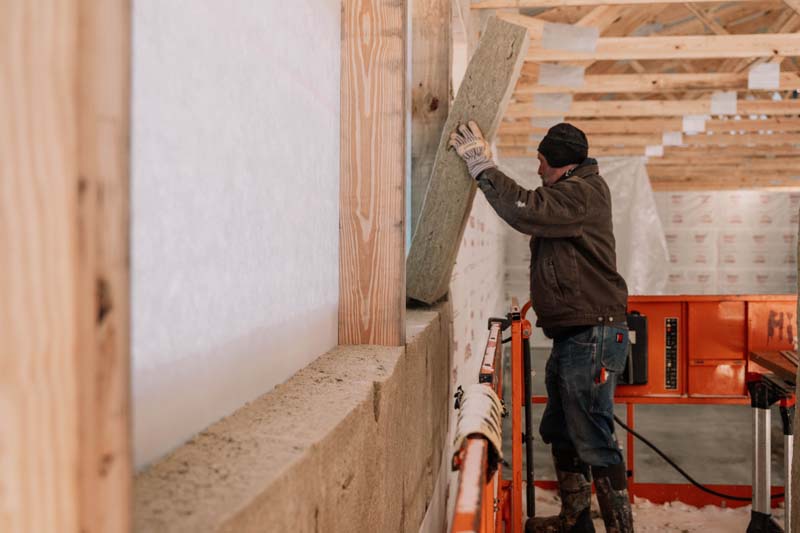
- Mineral Wool Insulation: Similar to fiberglass, mineral wool is made from inorganic materials but can still support mold growth if it becomes damp. It can trap organic materials mold can feed on.
- Open-Cell Spray Foam: While closed-cell spray foam is resistant to moisture, open-cell foam can absorb water and may harbor mold if it gets wet.
To prevent mold growth, it’s crucial to manage moisture levels effectively and choose insulation materials less prone to mold, such as closed-cell spray foam or rigid foam boards.
Modern building practices encourage buildings towards airtightness. A blower door test is a crucial diagnostic tool used to measure airtightness of buildings by quantifying air leakage through a building envelope. This test has become increasingly important due to stricter building codes and rising energy efficiency standards. Here’s a quick overview:
What is a Blower Door Test?
- Purpose: It measures how much air leaks into or out of a building through unintentional gaps and cracks.
- Process: A powerful fan is mounted in an exterior doorway to create a pressure difference, allowing air to flow in through leaks, these can then be measured.
Why is it Important?
- Energy Savings: Proper air sealing based on test results can reduce heating and cooling costs by 10-40%. Many air sealing investments pay for themselves within 3-7 years.1
- Building Codes: Since 2015, blower door testing has been mandatory for new residential construction under International Energy Conservation Codes, with specific air change rate requirements.
How Does it Work?
- Setup: All exterior doors and windows are closed, and blower door is installed.
- Testing: Fan creates a pressure difference (typically 50 Pascals), and air leakage is measured.
- Results: Results are expressed in terms of Air Changes per Hour at 50 Pascals (ACH50), this helps assess building’s airtightness.
Benefits of Blower Door Testing
- Identifies areas needing air sealing.
- Helps improve indoor air quality and comfort.
- Assists in determining proper sizing of HVAC systems.
An unintended consequence is overly tight buildings can encourage mold growth. This is primarily due to inadequate ventilation, leading to moisture accumulation indoors. When buildings are tightly sealed, they may trap humidity and moisture from various sources, such as cooking, showering, and even breathing. Without proper airflow, this moisture can create an ideal environment for mold to thrive.
To prevent mold growth, it’s essential to maintain indoor humidity levels below 60% and ensure adequate ventilation throughout the building. This can involve using exhaust fans, opening windows, or employing a well-designed HVAC system to effectively remove moisture from the air.
Even in our own home, we run a dehumidifier from Spring until Fall and target indoor humidity levels at 40%, otherwise we see mold forming on our windowsills.
To mitigate mold growth, it’s essential to manage moisture levels, ensure proper ventilation, and use mold-resistant materials when possible. Regular inspections and maintenance can also help identify and address potential issues before they escalate.
Mike Momb has been Technical Director for Hansen Pole Buildings, LLC of Browns Valley, Minnesota for more than 20 years. His daily post-frame blog, as well as his weekly “Ask the Pole Barn Guru” column can be followed at the company website, www.hansenpolebuildings.com/blog/.
Further Reading:
SolarTech, Blower Door Test: Complete Guide to Building Air Leakage Testing (2025),