
Originally Published as: The Original “No-Wood-in-the-Ground” Post-Frame Solution: No Challenge is Too Difficult for This Innovator to Overcome
How it All Began
Dave Gruhlke built his first house in 1988. It was not only the first house he’d built, it was the first of its kind. Neither he or the county zoning department had ever heard of a home built using pole barn construction for the framing.
Gruhlke had seen a new pole-frame garage that he thought was attractive enough to be a residence. So he took the carpentry skills he’d learned from his dad, looked into pole-frame construction, and designed the house he wanted to build.
When Gruhlke took the plan down to Planning and Zoning to get a building permit, they told him it couldn’t be done. They really didn’t have a specific reason to turn it down; it was simply different than what they usually approved for homes, so eventually they signed off.
He didn’t have the problems that some people had in the earlier days of barndominium builds, finding financing and insurance providers. He used the insurance company that he’d patronized for years. He went to the local bank and talked to the people who knew him. Relationships can make a big difference when you are challenging the norm Gruhlke said.
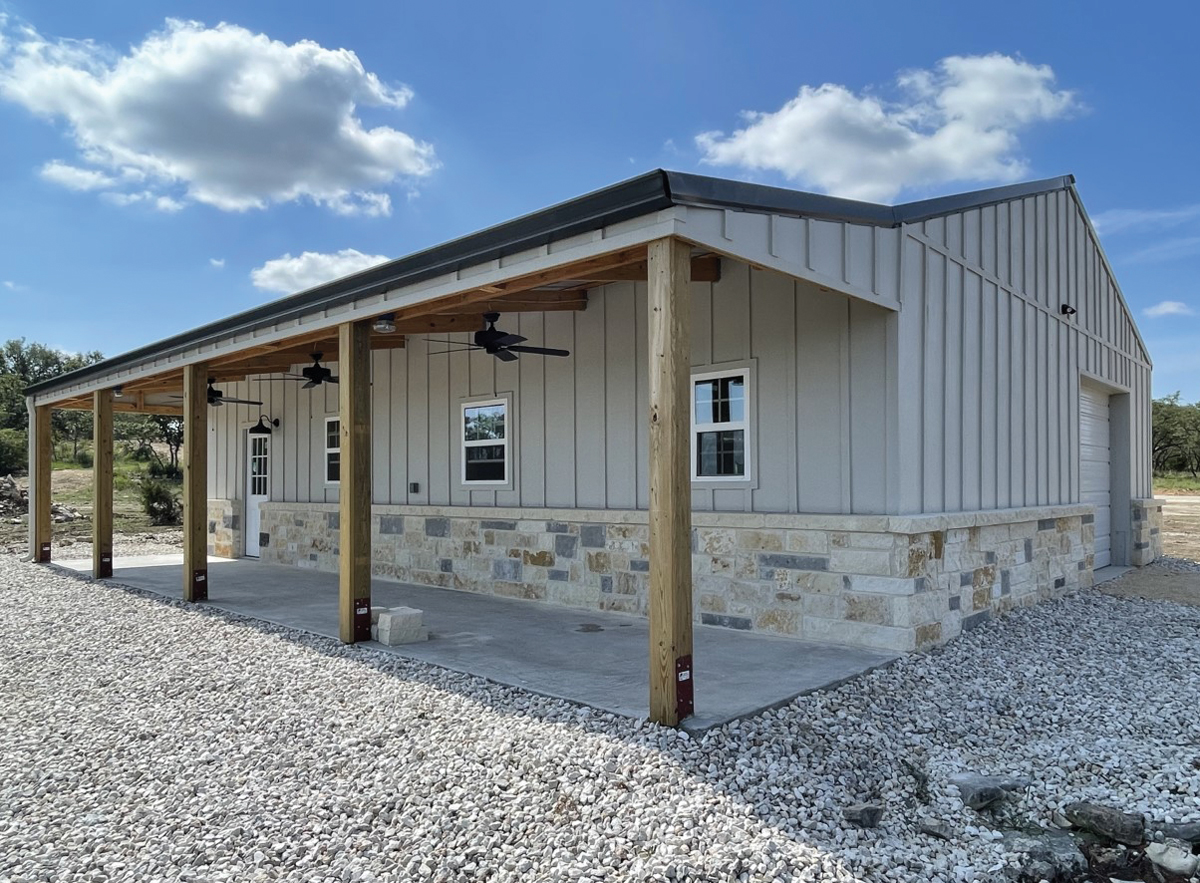
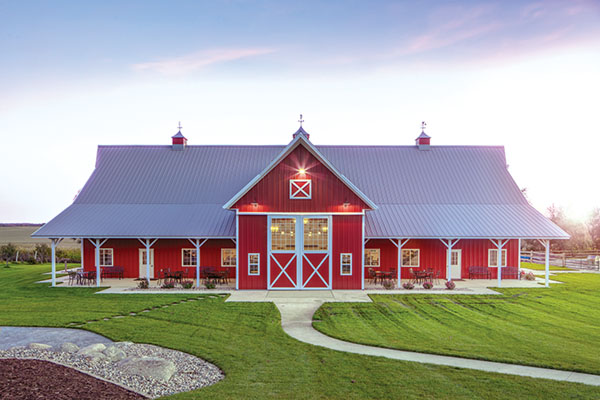
He bought a piece of land, hired a local pole builder to put up the shell, and built the home he wanted. The shop portion of the barndominium was big so he could store his cars and snowmobiles in it and have space enough to work on them.
A New Enterprise
Gruhlke had been working in the car salvage industry, but when he looked at the unique home he had built, he knew this was his new career path. He started his company, “Homework Design” in 1990. The company was focused on building post-frame homes. And he did sell a few post-frame homes amongst some stick-built houses and many post-frame garages and commercial buildings.
Few people, however, were willing to take the risk of going with a building style that was usually reserved for barns and sheds. People also pointed out that he was putting wood into the soil, albeit treated wood. Still many had seen the rot that can eventually deteriorate wood in the ground. It seemed that this new style of residential building might be done before it ever really got going.

However, Gruhlke realized the criticism was valid, and he started thinking that more could surely be done to protect the posts. What if he encased them in plastic sleeves?
Once he got the idea, he was on his way.
Plasti-Sleeve is Born
In 1994 he got his patent for a “protective sleeve and started manufacturing Plasti-Sleeve for posts in post-frame contruction. Of course, he now had the same problem he had with the post-frame home idea; it was something new and people were hesitant to try it.
Gruhlke called post-frame builders and suppliers and sent them samples. There were some nibbles, but no big catches until Morton Building found the sleeves were a great solution for their stub columns decaying at ground level and preventing movement during the freeze/thaw cycle. Morton Building and Plasti-Sleeve had an exclusive agreement for the first couple years of production. Morton still uses Plasti-Sleeve on their stub posts.
Plasti-Sleeve samples and literature were sent to many post-frame builders and suppliers throughout the midwest and eastern U.S. beginning in 1997. Gruhlke also began advertising in Frame Building News in the late 90s and displayed Plasti-Sleeve at the 2002 NFBA Expo. He was building relationships with industry people beyond Morton Buildings.
Then Gruhlke came out with a shortened version of the Plasti-Sleeve which was only 22” long to cover the area that usually encounters rot issues first – the areas a little below to a little above ground level. With this product, uses could expand to many outdoor-inground posts, and provide an economical alternative for extra protection of building columns.
Realizing that the posts in the ground are often not the only wood in danger of decay, Gruhlke came out with the Plasti-Skirt Board Cover. in 2002. Like the sleeves, it provides a decay-proof plastic barrier to protect the wood from ground contact.
Other Challenges
During the earlier manufacturing days, Gruhlke had a personal tragedy which intruded on his work life. Shortly after he began his manufacturing company, a snowmobile accident left him in a wheelchair. Despite this challenge, he continued with his construction company working as general contractor until 2002 when he began to focus solely on Plasti-Sleeve.
His physical situation makes travel to promote his business difficult at times, but he manages. His goals are to be as efficient as possible and avoid drama.
Above all, Gruhlke feels thankful that he has been able to make a good living based on the products he developed.
Business Today
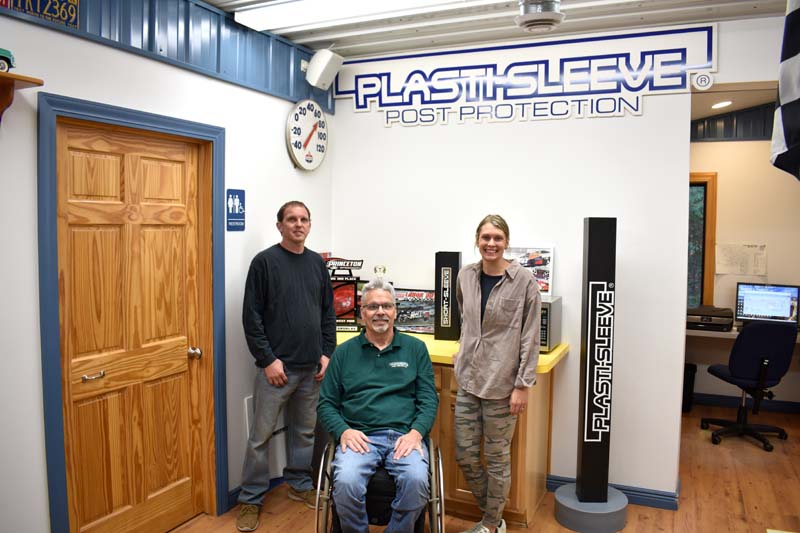
The company is a small concern; Gruhlke, his daughter Emily as office administrator, and a shipping manager. Gruhlke manages most sales with a few independent sales representatives, and manufacturing is contracted with Homework Design molds.
Their culture is based upon the golden rule he said, and everyone is encouraged to think outside the box and be innovative in developing useful solutions.
This approach informs his advice for people starting out in business. “Whatever you endeavor, make sure the quality is there in your product and in your service,” Gruhlke said.
“True business success means not only keeping up with the industry but getting ahead of it. Look at what is being done and think about what would make a process or a product better.
“One of the keys to success is working with good people, people who know their products and the industry,” Gruhlke said. “Manufacturers have helped us with development and getting things to market.”
Framing the Future
More and more, people are moving away from treated wood in the ground, so Gruhlke sees a lot of opportunity ahead for every company that offers protection for wood in post-frame.
In the longer term, Dave is looking for a possible partner or perhaps someone who would like to buy the Plasti-Sleeve brand and manufacturing. But for now, he enjoys what he is doing and he looks forward to continued growth.