
Originally Published as: Lean Lessons: How One Truss Manufacturer Is Changing the Mode
The construction industry is in the midst of a transformation. Faced with rising material costs, persistent labor shortages, and ongoing supply chain challenges, builders and suppliers alike are rethinking traditional practices. Increasingly, they are turning to lean manufacturing principles and prefabricated solutions to improve reliability, reduce waste, and deliver projects more efficiently.
Lean manufacturing, a concept long embraced in sectors like automotive and aerospace, is now making deeper inroads into construction. The approach emphasizes streamlined workflows, just-in-time delivery, and continuous improvement, with the goal of eliminating inefficiencies that drive up costs and slow down schedules. For builders, the payoff is clear: more predictable timelines, lower labor requirements, and fewer expensive surprises on the jobsite.
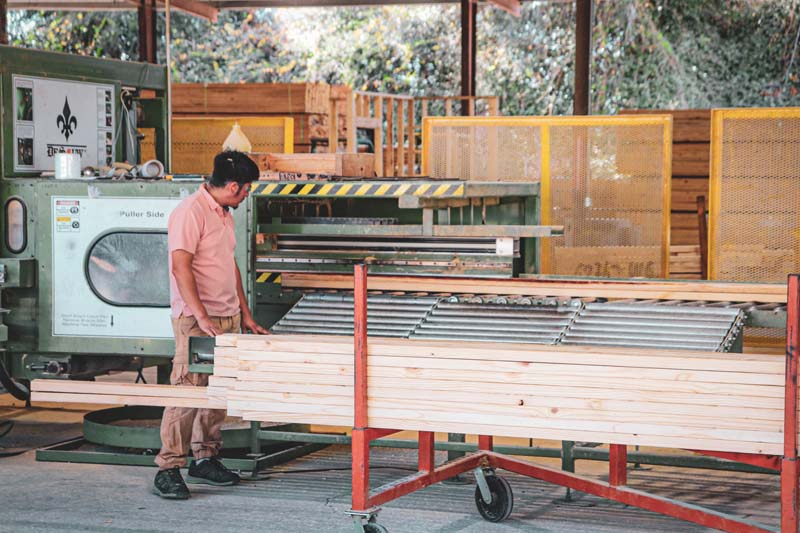
One company applying this philosophy is Hitek Truss, a Florida-based truss manufacturer that has built its operations around lean principles. Founded in 2004 by a group of custom homebuilders who were frustrated with inefficiencies in the supply chain, Hitek was created to bring greater precision and reliability to structural component manufacturing.
“Lean isn’t just about running an efficient plant, it’s about helping builders complete their projects faster and with fewer headaches,” says Ronald Guzman, general manager at Hitek Truss. “If a truss shows up late or doesn’t fit as designed, the entire schedule can unravel. Our process eliminates those disruptions.”
The company’s emphasis on precision-engineered components and right-on-time delivery reflects a broader industry trend: builders increasingly want pre-manufactured solutions that can be installed quickly, with minimal on-site modification. This shift has gained momentum as skilled labor has become harder to find. Pre-fabricated trusses, wall panels, and floor systems require fewer hands on site, helping contractors keep projects moving even with smaller crews.
The company’s recent expansion into wall panels, and its plans to eventually offer loose lumber alongside trusses, aligns with a growing movement toward providing builders with comprehensive component packages. For contractors, sourcing multiple structural elements from a single manufacturer not only simplifies logistics but also helps ensure consistency across an entire project.
Hitek’s evolution has been supported by its ownership under Ambassador Supply, which has invested in expanding capacity and improving efficiencies. But industry observers note that the company is far from alone. Across the country, more manufacturers are exploring lean practices as a way to deliver predictability in a market defined by volatility.
“Lean thinking is about creating value for the customer by cutting out anything that doesn’t add to the final product,” says Marty Stiffler, vice president of business development at Ambassador Supply. “That’s something our industry needs more than ever as we adapt to ongoing challenges.”
Beyond production efficiencies, lean principles are also influencing how companies communicate with builders. Clear, proactive communication reduces uncertainty and keeps projects on track. For many contractors, that level of reliability is as important as the products themselves.
The rise of lean manufacturing in construction reflects a broader reality: traditional approaches are no longer sufficient to meet today’s demands. By focusing on efficiency, consistency, and value, companies like Hitek Truss are showing how manufacturers can help builders navigate labor shortages, cost pressures, and supply chain disruptions, while laying the foundation for smarter, more resilient building practices nationwide.