
Originally Published as: Post-Frame Houses That Look Like Home: How builders can deliver residential curb appeal with post-frame efficiency
Post-frame construction has long been valued for what it does best — speed, efficiency, and structural performance. What’s changing is what clients expect it to look like when it’s done. Whether the project sits on a farm, a lake lot, or in a residential neighborhood, more owners want the finished building to read as a home.
That shift doesn’t require builders to abandon post-frame methods; it requires more deliberate choices—especially in how doors, windows, materials, and trim are handled. The aesthetic difference between “ag” and “residential” often comes down to a series of small, coordinated decisions.

Form Matters
Lower visual height, steeper rooflines, and consistent overhangs move a structure toward residential proportions. But on today’s projects, getting the form right is just the baseline. The elements that clients notice most are the ones they interact with every day: doors, windows, and finishes.
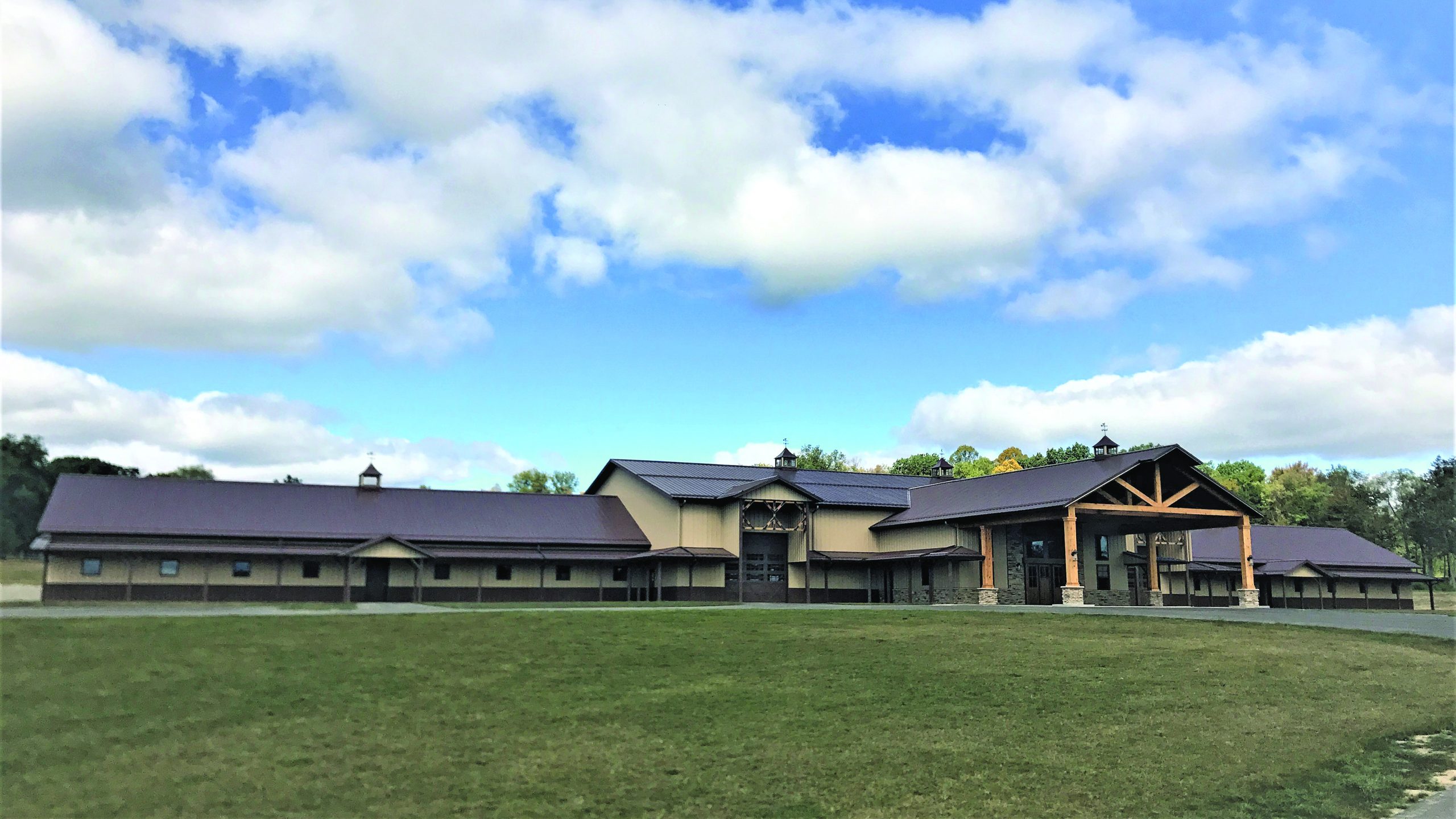
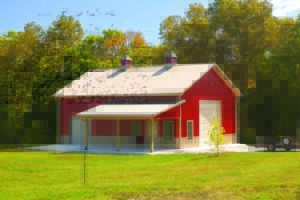
The structure’s overall shape still sets the tone. A tall rectangle with a shallow roof pitch reads as agricultural, while a lower wall height paired with a steeper roof immediately feels more like a home. A roof pitch in the 4/12–6/12 range will tend to align with surrounding residential architecture, and overhangs in the 12–24-inch range create the shadow lines and depth people subconsciously associate with houses rather than outbuildings. Coordinating overhang depth and soffit treatment early in the design process reinforces that impression.
Beyond the basic massing, breaking up large wall planes helps reduce the visual scale. Wainscot, changes in siding orientation, or modest bump-outs can keep façades from feeling flat or oversized. Porches, even shallow ones, introduce depth and usability, while dormers or similar roofline interruptions add rhythm without complicating the structural system.
Rooflines carry much of the visual weight and material choice can reinforce the residential connection. Concealed-fastener metal systems such as standing seam panels offer a clean, architectural look with strong performance. Architectural asphalt shingles will match many residential areas, and some composite or metal profiles designed to mimic traditional shingle or shake appearances can bridge the gap between durability and familiarity.
Smaller roof details can also contribute to the aesthetic. Dormers, cupolas, and gable vents can break up long ridgelines and introduce residential character, especially when they are scaled and placed intentionally rather than treated as afterthoughts.

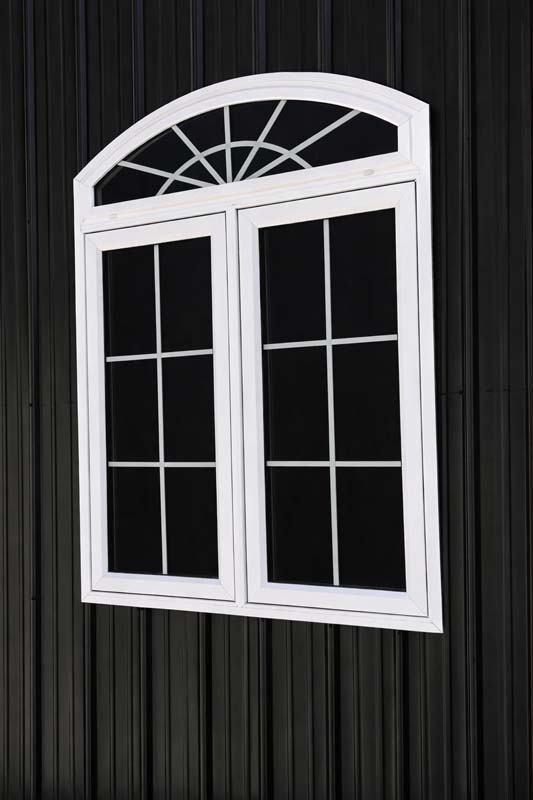
Image Courtesy of AJ Manufacturing
Garage Doors: Utility and Aesthetics
Few elements shift perception faster than the overhead door. Traditional post-frame buildings relied heavily on roll-up or ribbed steel doors because they were economical and easy to install. They worked—but they also reinforced an industrial look.
That’s changed. Today’s clients often want garage doors that relate directly to the home’s front entry. Raised-panel doors—typically in four- or eight-panel configurations—are now common, along with carriage-house styles that introduce depth, shadow lines, and visual interest.
Color has expanded as well. White and almond still dominate, with sandstone and brown close behind, but black doors have gained significant traction over the past several years, especially on modern or high-contrast designs. Many manufacturers now offer broad color palettes, making it easier to align doors with siding, trim, and roofing.
Material choices influence both performance and perception. Painted galvanized steel remains the workhorse, typically in the 24- to 29-gauge range, with heavier gauges more common in northern climates where insulated, steel-backed sandwich doors are expected. These insulated assemblies not only improve thermal performance but also give the door a more substantial, residential feel.
At the higher end, builders are seeing increased interest in specialty doors. Roll-formed steel panels offer a low-maintenance way to introduce warmth, while true wood doors—often custom-built—serve a smaller niche in regions where the aesthetic fits and people are willing to do the maintenance. Aluminum-and-glass doors, with tinted or mirrored panels, are another option, especially in modern designs where clean lines and transparency are part of the look.
Details complete the transition. Windows in overhead doors—whether across the top panel or arranged vertically—can mirror the patterns used elsewhere on the structure. Decorative hardware, including hinges and handles, adds another layer. These elements are often non-functional, but they visually reinforce residential styling when used consistently.
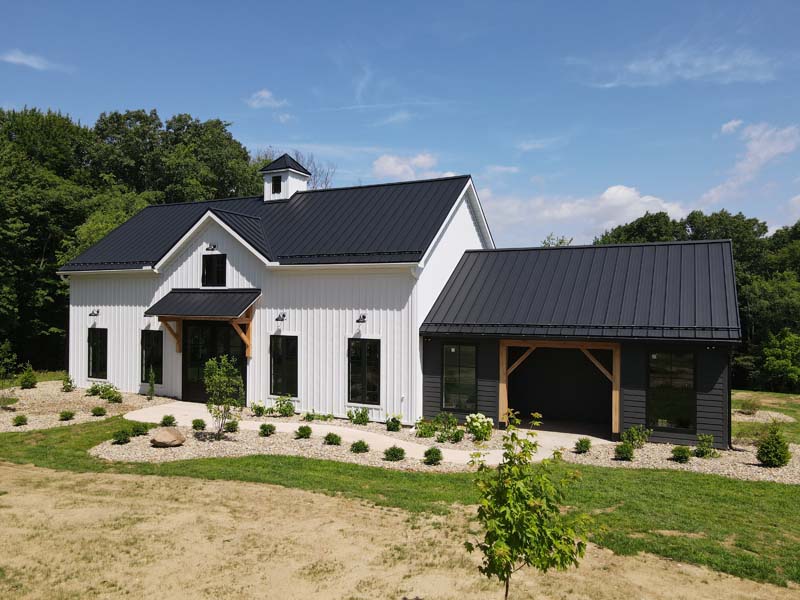
Image Courtesy of Metal Exteriors
Entry Doors and Human-Scale Details
Entry doors are another point where material and design intersect. While wood and composite doors are common in residential construction, durability concerns—especially in exposed post-frame applications—often lead builders toward steel or aluminum systems with thermal breaks.
Modern entry systems offer a wide range of options: multiple panel configurations, embossed textures, integrated glass, sidelites, and transoms. These features allow builders to match or complement the main residence while maintaining long-term performance. Wood-look finishes and fiberglass options expand the design palette without introducing the maintenance demands of real wood.
The entry door and garage door should be in sync. They may not be made of the same material or be exact in style, but they should look like they belong together. The goal is alignment. When entry doors share proportions, colors, and detailing with other openings, they reinforce the residential feel.
Windows: Aligned and Coordinated
If doors set the tone, windows need to carry it. A post-frame structure with minimal or poorly placed windows will almost always read as a shop, regardless of other upgrades.
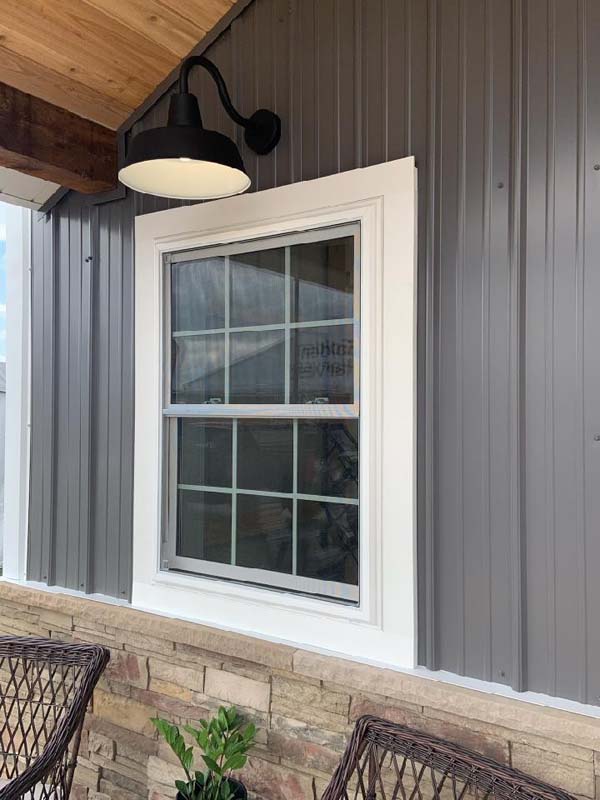
The key is not just adding windows, but selecting and arranging them in ways that reflect residential design. Double-hung and casement units are common starting points, but the real impact comes from how they’re used. Aligning window head heights across elevations creates visual order. Grouping windows, adding transoms, or incorporating shapes like half-rounds or specialty units introduces architectural character.
Grilles play a role as well. Prairie grids, colonial patterns, or simple divided lites can echo the windows in doors. Even when using standard units, these details help tie the building into its surroundings.
Coordination matters. Garage door glass, entry door lites, and window packages should feel like they belong to the same design “family.” When they do, the building reads as a cohesive residential structure rather than a collection of parts.
Siding, Accents, Material Strategy
Wall systems do a significant amount of visual work. Exposed-fastener steel panels remain common—and cost-effective—but on their own they tend to read agricultural. Builders looking to shift that perception are increasingly mixing materials and profiles.
Horizontal lap siding, board-and-batten, and flush wall panels can all be achieved in steel or composite products, offering residential aesthetics with post-frame durability. Wainscoting, accent walls, and changes in orientation help break up large surfaces and reduce scale.
Wood and wood-look materials are especially effective when used strategically. Roll-formed steel panels that mimic cedar or barn wood are widely available and provide the appearance of natural materials without the associated maintenance concerns. Additionally, new technologies in steel manufacturing, such as digital printing, can produce wood patterns that easily fool the eye. Real wood—whether rough-sawn cedar, cypress, or reclaimed-style planks adds texture and natural warmth, but builders need to account for exposure, insects, and fire risk.
Accent applications can make a big impact. Entry features, soffits, and select wall sections can introduce wood tones or contrasting materials without committing the entire structure to higher-maintenance products. The posts used to frame the house can be put to use to construct a porch adding a warmly rustic charm. Combining all of these elements with stone or masonry at the base further reinforces a residential look.
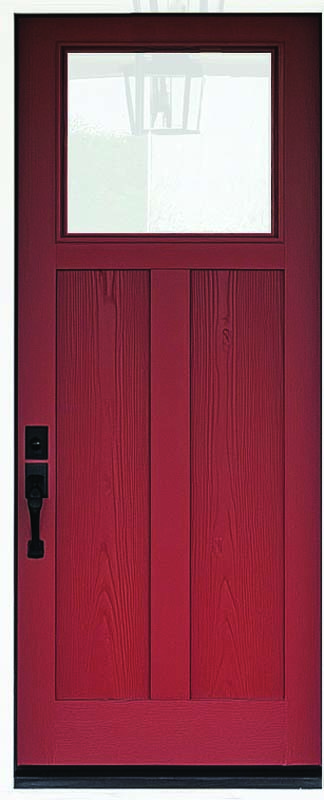
Image Courtesy of Plyco
Trim: Scale and Finish
Trim is often overlooked, but it plays a critical role in how a building is perceived. Narrow, utilitarian trims are a holdover from agricultural construction. Moving to wider profiles — around 3½ inches or more—immediately shifts the visual scale toward residential.
Modern trim systems also allow for cleaner installations. Two-piece or snap-together profiles can conceal fasteners and create sharper lines. Wood or composite trim elements can be integrated where appropriate, particularly around doors, windows, and corners.
Consistency is key. Matching trim styles and colors across openings, corners, and rooflines ties the entire design together.
Lighting, Hardware, and Finishing Touches
Small details often carry disproportionate weight. Exterior lighting — whether wall-mounted fixtures, soffit lighting, or post-mounted lanterns — adds both function and residential character. Hardware, even when decorative, reinforces style when it aligns with door and window choices.
These elements are also where regional trends tend to show up first. New styles often emerge in western markets before moving east, but the underlying principle remains the same: consistency across components creates a finished look.
Balancing Aesthetics, Performance, and Cost
Every design decision comes back to three factors: function, appearance, and economics. A door that looks right but doesn’t perform in the climate or a material that adds maintenance the owner didn’t expect creates long-term issues.
Builders are increasingly helping clients think in terms of life-cycle cost rather than just upfront price. That includes installation, durability, maintenance, and eventual replacement. In many cases, investing in better doors, windows, and finishes up front delivers both improved performance and a more appealing aesthetic.
Putting it All Together
Creating a residential look in post-frame construction isn’t about changing the system—it’s about how the system is finished. Garage doors that relate to entry doors, window packages that establish rhythm and proportion, materials that add texture and scale, and trim that reflects residential standards all contribute to the final result.
When those elements pull together, the building stops looking like an outbuilding and starts feeling like a home, a distinction that matters to homeowners.
Resources
• AJ Manufacturing, Inc. https://ajdoor.com/
• American Garage Door Factory www.americangaragedoorfactory.com
• Central States www.centralstatesco.com
• Graber Post Buildings Inc. www.graberpost.com
• H&D Quality Builders www.HDQualityBuilders.com
• Metal Exteriors www.metalexteriors.com
• Plyco Corporation www.plyco.com
• Steel Dynamics www.steeldynamics.com
• United Steel Supply www.unitedsteelsupply.com
• Wick Buildings www.WickBuildings.com