
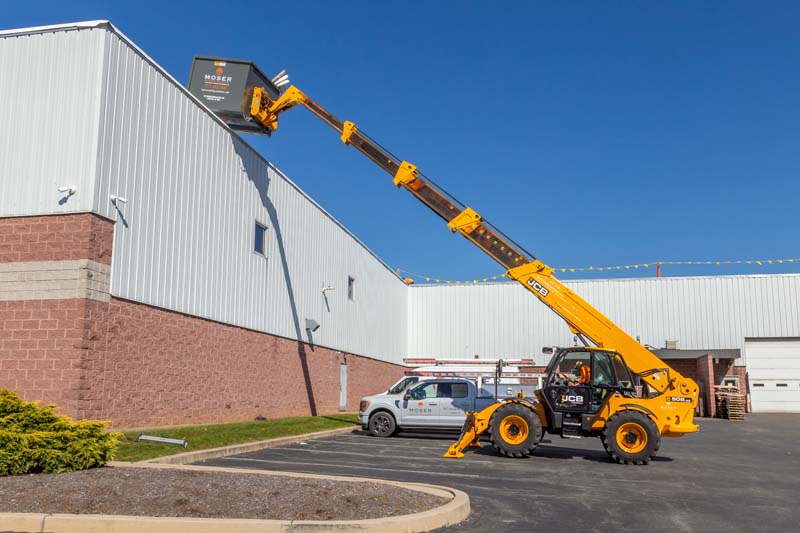
Originally Published as: Jobsite Safety: Housekeeping, Fall Protection, and Habits Matter Most
Jobsite safety in post-frame construction is often discussed in terms of compliance, as in meeting OSHA requirements, using approved equipment, and checking the right boxes. But safety outcomes are shaped just as much by daily habits, organization, and personal decision-making as by written policies.
From cluttered ground conditions to walking upon purlins on a partially sheeted roof, risk shows up in predictable places. Understanding where those risks originate — and how experienced crews manage them — is key to improving both safety and productivity on post-frame jobsites.
Ground-Level Safety: Where Organization Sets the Tone
Many jobsite injuries occur long before anyone climbs onto the roof. Trips, lacerations, strains, and repetitive handling injuries often stem from poor housekeeping and inefficient waste management. Justin Oberholtzer of Creekside Manufacturing, LLC, a producer of hoppers for the collection of construction waste, has provided us with some insights about jobsite safety.
On jobsites without clear places to put trash, debris accumulates quickly. Cutoffs with exposed nails, loose packaging, and scrap material create tripping hazards and increase the likelihood of injuries. In windy conditions, loose debris can become airborne, creating additional risk for workers and equipment.
Contractors note that messy jobsites are not usually the result of workers not caring. More often, they reflect a lack of convenient disposal options. When throwing something away requires extra steps, waste ends up on the ground “temporarily” — and stays there.
Heavy trash cans introduce their own hazards. As they fill, they require manual lifting and repeated handling. Workers may also attempt to climb onto roll-off containers to dump trash by hand, which can create fall hazards and OSHA violations if they are not tied off.
Efficient Waste Management as a Safety Tool
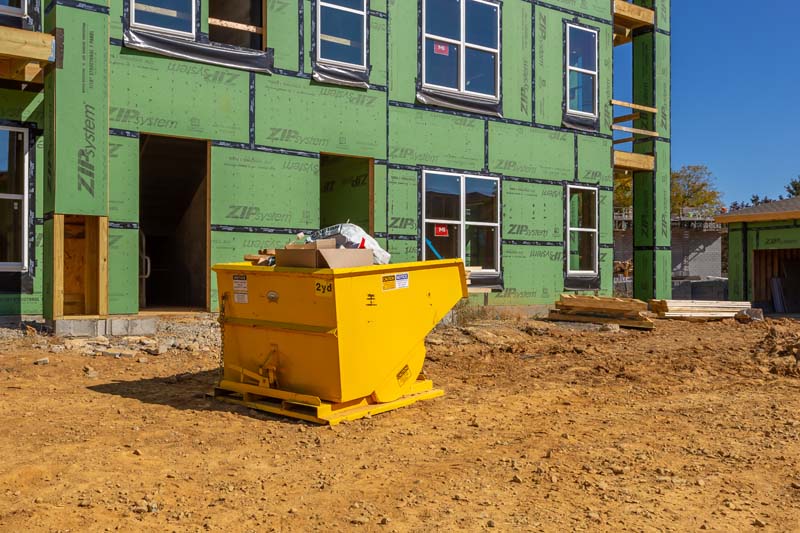
Providing multiple waste collection points close to where work is being performed significantly improves jobsite safety. When crews have a designated place to put debris, sites stay cleaner and more organized.
Mobile dump hoppers allow contractors to position waste containers exactly where trash is being generated — near saw stations, framing areas, or access points — and move them as the work progresses. Dumping waste from a hopper using a lift takes seconds and can be done from the ground, eliminating the need to manually empty heavy containers or climb onto roll-offs.
Contractors also report that organized waste handling improves focus. When workers do not have to think about where trash goes, they can concentrate on the task at hand. Clean sites make tools easier to find, reduce frustration, and speed up end-of-the-day cleanup.
Over time, these small efficiencies add up. Dumping a pallet of debris by hand may take several minutes, while dumping a hopper takes only seconds. Across dozens of dump cycles per job and hundreds per year, the time savings can be substantial — often enough to justify the equipment investment on productivity alone.
Equipment Design and Site Organization
Modern waste-handling equipment incorporates features designed to reduce risk and simplify operation. Standard dump hoppers typically require only a single lever to release and reset. Additional options include pull-rope releases for dumping into elevated containers and “bump-and-dump” mechanisms that allow operators to trigger the dump by gently contacting the hopper against a roll-off container.
These features reduce the need for workers to climb on equipment or handle debris manually. Simplicity plays an important role as well. If an operator knows how to run a lift, they can typically operate a hopper with minimal additional training.
This is especially valuable for newer workers, who are often assigned cleanup duties. Instead of improvising or climbing, they can use equipment designed specifically for the task, reducing risk while maintaining productivity.
Safety, Compliance, and Professional Reputation
Proper waste management supports compliance with OSHA requirements by eliminating common violation points, such as climbing roll-off containers without fall protection. It also improves how a jobsite is perceived by owners, inspectors, lenders, and neighbors.
Many contractors develop a reputation for clean, organized jobsites. That visibility matters. A tidy site signals professionalism, discipline, and pride in workmanship, and can influence future work opportunities.
Working at Elevation: The Persistent Fall Risk
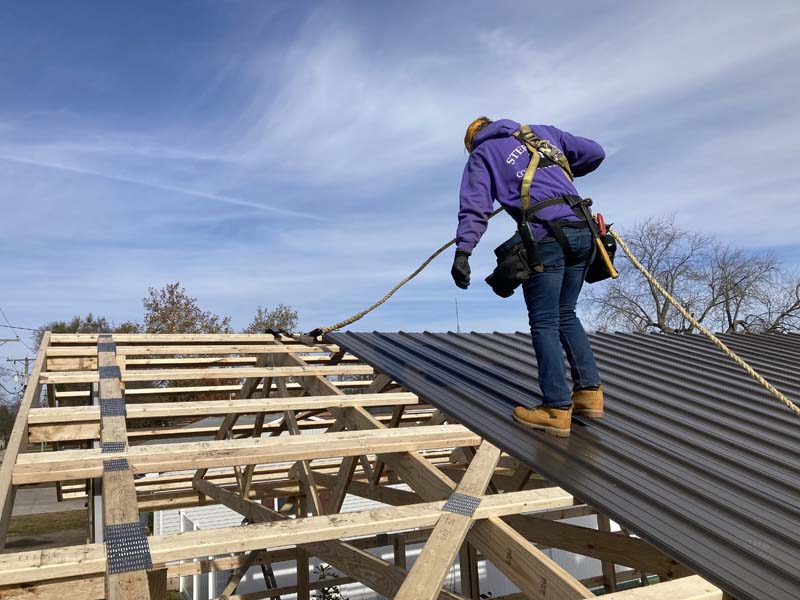
Falls remain the leading cause of fatalities in construction according to OSHA, and post-frame construction presents unique challenges. Unlike many commercial buildings, post-frame structures often lack continuous roof decking. Crews may be walking on purlins spaced 2 feet apart, sometimes on relatively low-pitched roofs which can create a false sense of security. Todd Meinhold of Ridgeline Safety Systems has some insight about safety on the roof to share.
Early in the roofing process, risk is often highest. Workers may step back from newly placed sheets and suddenly find themselves without solid footing. Even after panels are installed, slick metal surfaces increase the likelihood of slips compared to asphalt roofing, which offers more inherent grip.
Despite these risks, fall protection is still inconsistently used. Some workers believe harnesses slow them down or create additional hazards. Others assume they will not be the one who gets hurt, a mindset often reinforced by youth and overconfidence.
The industry is beginning to change, particularly as metal roofing becomes more common and scrutiny increases. Contractors recognize that preventing incidents is the best way to avoid OSHA involvement. A single fall can bring attention no one wants — and many falls leave no opportunity for recovery.
Temporary and Permanent Fall Protection Systems
Most fall protection systems used in post-frame construction are temporary. Anchors are installed, removed, and reinstalled as crews move across the roof. This constant fastening and unfastening slows work and contributes to resistance among workers, leading some systems to be underused or improperly installed.
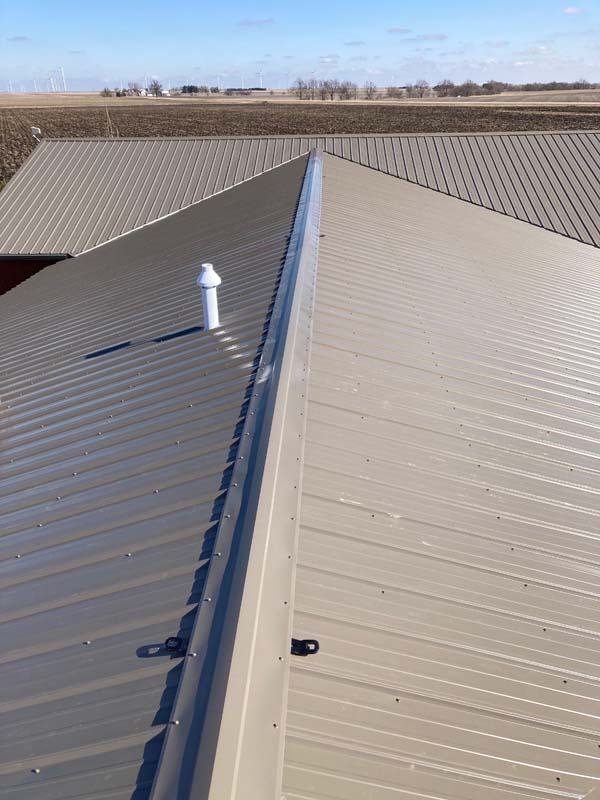
Permanent roof anchor systems offer a different approach. Once installed, they remain in place, providing long-term protection not only for construction crews but also for anyone who needs roof access later, including HVAC technicians, solar installers, chimney sweeps, or maintenance personnel. Installation typically takes only minutes, and training crews to use permanent systems is straightforward.
Permanent systems also reduce friction. When anchors are already in place, workers are more likely to tie off, especially if they encounter slick conditions unexpectedly.
Training, Rescue Planning, and Distraction
Fall protection equipment alone does not guarantee safety. Workers must understand how systems function and what to do if a fall occurs. Suspension trauma can begin within minutes, making rescue planning essential. Without a ladder, lift, or other means to retrieve a fallen worker quickly, even a properly worn harness can become dangerous.
Distraction is an increasing concern on jobsites. Mobile phones and constant notifications divide attention and increase the likelihood of missteps, both on the roof and on the ground. Some safety professionals recommend leaving phones on the ground entirely when working at elevation.
Even when tied off, inattentive workers can fall. Fall protection reduces the severity of an incident, but awareness and focus remain critical.
From Compliance to Adoption
Safety compliance can be mandated. Safety adoption cannot. Contractors can provide equipment, training, and policies, but individual workers ultimately choose whether to use them.
It is imperative that the crew foreman emphasizes the importance of looking beyond “checking the box.” Equipment that sits unused offers no protection. Clean sites, consistent tie-off practices, and thoughtful planning reflect a culture where safety is personal rather than procedural.
In post-frame construction, the most effective safety strategies are often the simplest: reduce clutter, eliminate unnecessary handling, plan for falls before they happen, and make the safest choice the easiest one to follow.